


How could the dots possibly connect between a half-marathon on a rainy Sunday in Ottawa and the storm clouds around one of the most alarming projections for future global warming, amped up and reliably distorted by one of the biggest purveyors of misinformation on the planet?
And, you may be wondering…can we weave this yarn in no more than 2,110 words, to keep faith with the 21.1-kilometre run during Ottawa Race Weekend?
This half-marathon of a story begins with a media release last week from Éric St-Pierre, Liberal MP and member of the House Environment and Sustainable Development Committee, declaring that he planned to run Sunday “dressed as one of Canada’s most recognizable democratic symbols: Parliament’s Peace Tower.” The story ends with the long-overdue retirement of a climate projection introduced in 2011 by the Intergovernmental Panel on Climate Change (IPCC). RCP 8.5 laid out a high-emissions version of what would happen if countries moved through the climate emergency with no effort to get it under control.
In lead-up to race weekend, the release from St-Pierre’s office described the first-term MP as a “seasoned ultramarathon runner” who “sees this highly visual, non-partisan run as a lighthearted way to celebrate public service” while promoting physical activity and preventive health.
Non-Partisan and Lighthearted?
The moments before the race began Sunday morning were boisterous and electric. But the committee’s recent deliberations have been anything but non-partisan or lighthearted.
Earlier this year, two of Canada’s leading climate policy experts, Simon Donner and Catherine Abreu, flagged the “junior high behaviour” among all the federal parties after they were blocked from testifying during the committee’s work on the federal government’s climate action plan.
Then in a more recent interview with The Energy Mix, St-Pierre complained about partisan score-settling around the committee’s final report.
It’s reasonable to believe that MPs from at least two of the parties in the committee debate (the Greens don’t have party status, and the NDP didn’t at the time) approached their deliberations from a position of genuine support for ambitious climate targets. There were almost certainly at least two or three people in the room whose motivation for seeking public office began and possibly ended with climate change and climate solutions.
But the inescapable momentum of day-to-day party politics seems to have limited the basic civility with which some of those MPs could respond to the big-picture crisis. And it didn’t end there. On Friday, Radio-Canada reported that 14 Liberal MPs from across the country had written to Prime Minister Mark Carney in late April, expressing their “unease” about the government’s drastic rollbacks of environmental assessment regulations and reiterating their support for the federal Clean Electricity Regulations.
“We remain deeply concerned; the government’s credibility will be seriously compromised,” the MPs wrote, adding that “climate change remains the greatest threat of our time.” The letter went out not long before Carney finalized a carbon pricing agreement with Alberta and released the government’s long-awaited national electricity strategy, both seen as precursors to a final deal for a new bitumen pipeline to the West Coast. (Though that pipeline is still a long way from a done deal.)
No Names, Please
Yet “despite signing their names at the bottom of the letter, the MPs do not want to be publicly identified, stating that their approach is intended to be constructive and respectful,” Radio-Canada wrote.
St-Pierre has not confirmed whether he was one of the 14 MPs, though it’s hard to imagine that he wasn’t given his past leadership role in climate philanthropy.
But the clear implication from the Radio-Canada coverage was that the MPs feared they would lose clout with the Prime Minister and his senior advisors if they dared express themselves, out loud and by name—and if that’s right, it’s troubling. Even starting from the (I think reasonable) assumption that everything Carney does is meant to achieve one job, one job—keeping Canada sovereign by preventing annexation by Donald Trump’s climate-denying, white supremacist regime—the Canada we want to protect has to be a place where our elected representatives or anyone else who isn’t spewing hate or misinformation can speak their mind.
It’ll be that much harder to differentiate Canada from what the United States has become if even a group of MPs has to think twice before speaking freely. That much easier to rebuild public trust, diversify Canada’s trading relationships, and bring on the new, clean climate economy if it’s clear that anyone participating constructively will be heard.
All of this is so basic that it shouldn’t even need to be said. The principle is big enough that it’s all of everything, but affirming it should be easy. And if we can’t deal with the small stuff, it’ll be tougher to get a handle on the nerdier, more complicated aspects of the climate conversation like RCP 8.5, or to keep on scaling up the climate solutions that helped make that scenario obsolete.
RCP…What?
As our friends at Carbon Brief recounted in this excellent explainer nearly seven years ago, RCP 8.5 was one of a family of “Representative Concentration Pathways” developed by the IPCC to balance some of the uncertainties around projecting future climate change—from how much more climate pollution humanity will pour into the atmosphere, to how sharply the climate system will respond. The RCPs were introduced as an interim solution, at a time when climate scientists were looking to factor in different technological and socio-economic trends but the complex, new models they needed were still in development.
Important to note: Despite the foreseeable, kneejerk dismissal you’ll hear from Trump, his enablers, and the fossil fuel extremists who lavishly and scandalously funded his return, this is not the sound of science undercutting the basics of what we know about climate change: That it’s real, accelerating, and caused by human activity, beginning with extracting and burning fossil fuels. Exactly the contrary: it’s a snapshot of cautious, responsible climate scientists sweating the details, acknowledging the complexities, and pouring every effort into deepening their understanding of the basics we know to be true.
The scientists who created RCP 8.5 never intended it as a most likely “business as usual” scenario for future climate outcomes, Carbon Brief writes. Still, it was often treated that way, even though it incorporated some pretty wild assumptions—like the notion that faster population rise would force countries to burn more coal than they could ever realistically mine and process.
National Observer columnist Chris Hatch was out this morning with an excellent overview of what’s been going on with RCP 8.5. (Note to Chris: Such fun when we occasionally cover the same topic on the same weekend!)
RCP 8.5 is a big enough departure from observable reality that it’s been under attack for years. Michael Liebreich, founder of the analytics shop that became BloombergNEF, wrote earlier this month that the “wildly implausible” scenario prompted him to create the #RCP85isBollox nearly a decade ago—a simpler time when a blue bird was the symbol for a popular social media platform that wasn’t yet owned by a seig heiling tech bro.
Liebreich makes the case that RCP 8.5 was implausible from the start. And yet, it has rated a mention in some 105,000 papers listed on Google Scholar, “including an incredible 2,290 published so far this year”—and he says the majority of them have used the scenario inappropriately.
That could explain the fairly large share of the scariest climate impact projections that have crossed our desks over the last few years that used RCP 8.5 as their starting point. Often enough, when authors advocate for the least affordable, most impractical and implausible climate solutions on offer—nuclear fusion, a massive and massively expensive scale-up of nuclear fission or carbon capture and storage, biomass energy with carbon capture and storage, or the most esoteric forms of global cooling—they’re anticipating a future crisis made to look even worse than it will actually be. The panic behind these extreme Hail Mary plans sometimes reflects the incorrect belief that RCP 8.5 just might happen.
Climate Action Is Still Urgent
The paper that formally withdrew RCP 8.5 from the IPCC process cited “trends in the costs of renewables, the emergence of climate policy, and recent emission trends.” In other words: clean technologies like solar, wind, batteries, and heat pumps are soaring, many countries are developing not-half-bad climate policies, and that’s begun to bend the curve on future emission trajectories.
“RCP 8.5 (and its successor SSP5-8.5) were designed to be a worst-case emissions scenario, not the most likely outcome even in a world that did nothing to address climate change,” write climate scientists Zeke Hausfather, Glen Peters, and Piers Forster in their Climate Brink newsletter. “We were probably never headed to a tripling of global emissions by 2100 (to say nothing of a five-fold increase in coal use), even in the absence of climate policy.”
And “the 21st century is now unlikely to see a continued expansion of fossil fuel use globally, with current policy scenarios reflecting relatively flat global emissions going forward,” they add.
But we still have a long way to go.
Along with RCP 8.5, the scientists have also ruled out the most optimistic climate outcomes in the IPCC’s earlier modelling. Today’s most likely scenarios average out at long-term global warming of 2.8°C.
You can pretty much double that for Canada, triple it for the Arctic. And the average masks a range from 2.1 to 3.7°C, with a very small chance that climate feedbacks will tip long-range warming above 4°. We’re already seeing the effects of about 1.45°, and in the decade since the Paris climate conference we’ve learned that every one-tenth of a degree above 1.5° will be measured in millions of lives saved of lost.
Hausfather, Peters, and Forster warn:
The brutal math of climate change is this: as long as CO2 emissions remain above zero, the world will continue to warm. The medium scenario ends up closer to 3.7°C by 2150, while the high scenario ends up more or less matching the warming in the old RCP 8.5 scenario despite an assumption of flattening or modestly declining emissions after 2100.
It is also wrong to say that the worst predictions of climate impacts this century can now be ruled out by this revision. High-end temperature projections for the end of the century are reduced compared to earlier IPCC assessments… [but] the damages projected in these earlier climate simulations remain very much in play.
Don’t Confuse Trump With Facts
The upshot here is that climate hawks and everyone else can take the win. But we still need to double down on faster, deeper carbon cuts aimed at leaving no one else behind, while financing the effective climate solutions that will keep people safe and energy affordable.
Except that’s not a level of nuance that anyone would expect Donald Trump to understand, even if he wanted to.
In one of his regular “sundowning” sessions on his Truthless Social platform, Trump made the ridiculous claim that “the United Nations TOP Climate Committee just admitted that its own climate projections (RCP 8.5) were WRONG! WRONG! WRONG!”—when the paper was issued by a science team, not the UN, and its findings were specific, focused, and far more detailed than the summary you’ve just slogged through.
Even so, cue the mandatory wave of social media rage, amplifying a false claim that misrepresented a scientific finding that, for many people in the field, has had little or no relevance for the better part of a decade.
A Marathon, Not a Sprint
With stakes so high, and the remaining warming scenarios still shrieking for faster action, a half-marathon on a rainy Sunday in Ottawa is probably a decent metaphor for what has to come next. We do need a faster, more integrated climate response that shows Canada and every other country “treating it like a damned emergency”. We don’t need manufactured crises and outrage, whether they come from Trump and his malicious and manipulative Canadian ambassador, or from the Alberta government and its separatist fifth column for annexation.
And we need climate hawks working together, not at cross-purposes. “I want to be clear, it’s junior-high behaviour by the Conservatives, the Bloc, and the Liberals,” the former chair of Canada’s Net Zero Advisory Board, University of British Columbia climate scientist Simon Donner, told The Canadian Press after his and Abreu’s aborted committee appearance. “Like, they’re all guilty here.”
A climate hawk MP carrying the Peace Tower on his shoulders is a good starting point for the positive, genuine attitude reset that everyone needs. The latest scientific paper on RPC 8.5 shows we’re running out of time to move farther, faster.

Mitchell Beer traces his background in renewable energy and energy efficiency back to 1977, in climate change to 1997. Now he and the rest of the Energy Mix team scan 1,200 news headlines a week to pull together The Energy Mix and The Energy Mix Weekender.
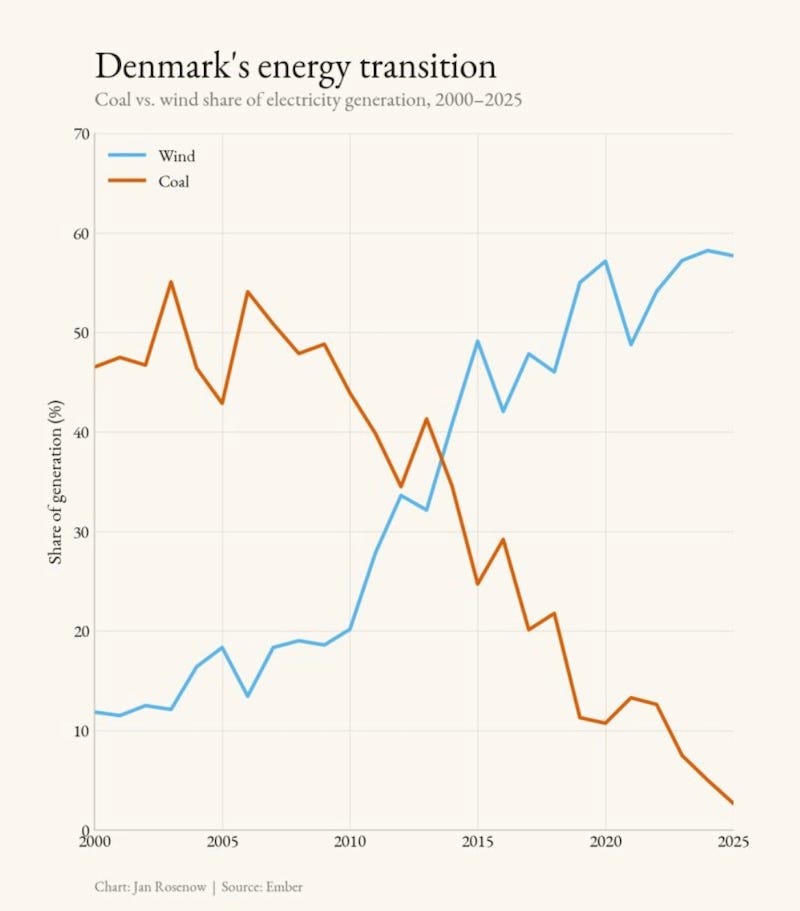
Chart of the Week

$26B Coal Extension Plan Will Raise Sask. Power Rates 95%, Curtail New Renewables Buys
Indigenous Clean Energy Projects Replace 140 Million Litres of Diesel in Remote Canada
Texas Expert Calls Out B.C.’s ‘Free Pass’ for LNG Canada As Expansion Looms
BYD Eyes 20 Dealership Locations After Canada Greenlights Chinese EV Imports
Vancouver Reverses Its Gas Heating Ban Again Despite Public Opposition
Mikisew Cree First Nation Sues Ottawa, Alberta Over Oil Sands Health Impacts
UN General Assembly Adopts Landmark Climate Opinion by International Court of Justice
Investors for Paris Compliance Shuts Down After Testing Limits of Voluntary Net Zero Pledges

14 Liberal MPs pen letter to Carney raising concerns over environmental backslide (Canadian Broadcasting Corporation)
Oil Pipelines Align with Teachings of Jesus, Says Alberta Premier (The Tyee)
Carney’s plan to ram big projects through is not progress. It’s recklessness (Toronto Star)
Factcheck: U.S. and Iran are world’s only major emitters without net-zero targets (Carbon Brief)
In Qatar, Energy Sector Damage Is Severe, and the Way Back Will Be Long (New York Times)
U.S. Bill Seeks to Tax Windfall Oil Profits in US amid Iran War (Rigzone)
SBTi updates rules to allow less ambitious near-term targets (Corporate Knights)
$1.5B battery separator plant in Port Colborne still a go despite Honda suspending electric vehicle plans (Canadian Broadcasting Corporation)
Liability for Texas orphan wells soars as numbers, depths, and costs rise sharply (Institute for Energy Economics and Financial Analysis)
Electricity generation from solar could exceed coal in Texas for the first time in 2026 (U.S. Energy Information Administration)
Peat Bogs: Lithuania Has a Plan to Combat Global Warming (and Also Russian Tanks) (New York Times)
Cuba Runs Out of Fuel (Bloomberg)